
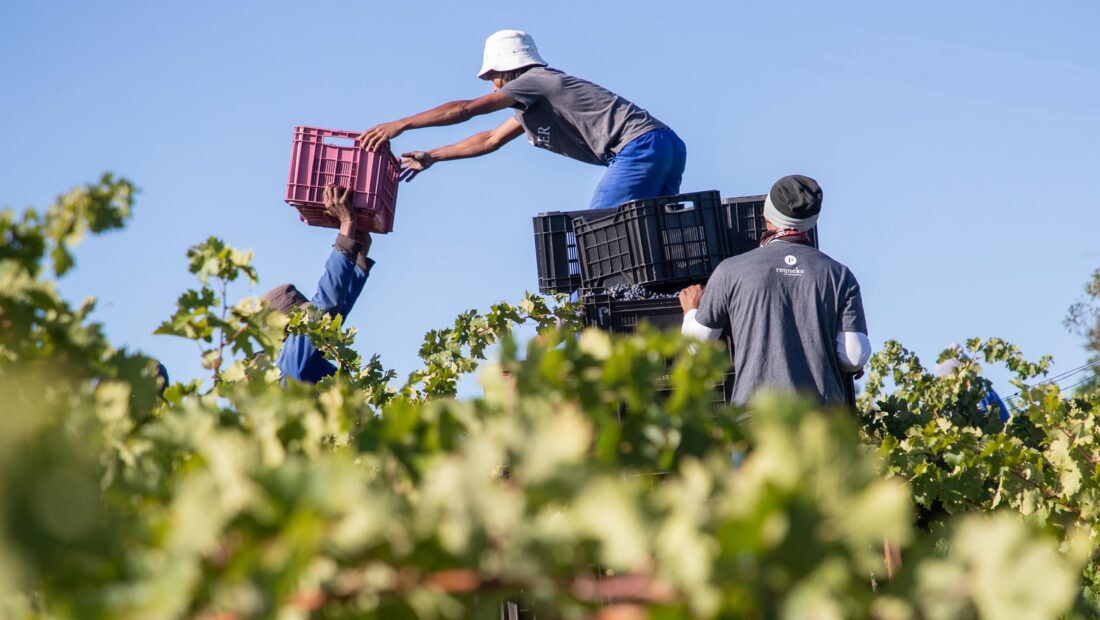
A wine estate can invest millions in vineyards, cellar equipment, tasting rooms and export marketing. It can produce an excellent bottle, win international recognition and attract visitors from around the world. Yet none of that guarantees a sustainable business if the industry struggles to bring new people through the door — or gives those who do enter too few opportunities to build a career.
South Africa’s wine industry has a talent challenge that begins long before the first grape is picked. For young people growing up in farming communities, vineyards may be part of the landscape, but a career in wine can remain out of reach.
A new initiative from Pebbles Project Youth Development is attempting to close that gap, with an appeal to wine estates, restaurants and hospitality businesses to host young people completing its Serve-It programme. The placements, scheduled to run from 2 November 2026 to 29 January 2027, are designed to turn structured learning into practical workplace experience.
The initiative raises a broader question for the drinks industry: is South Africa doing enough to turn its young talent into the skilled workforce its businesses need?
The gap between living near wine and working in it
For many young people in the Cape Winelands, wine is not an unfamiliar product. Vineyards, cellars, tasting rooms and hospitality businesses form part of the environment in which they grow up.
But proximity is not the same as access.
The Pebbles Project describes a particular barrier: for some young people, alcohol carries difficult associations because their families and communities have experienced its harmful effects. That can make the prospect of working in the wine industry more complicated than simply developing an interest in the product.
There are also practical obstacles. A young person may have limited professional networks, little experience of formal workplace expectations or no clear understanding of the range of jobs available beyond vineyard work.
The industry is much broader than winemaking. It includes wine service, tasting-room hospitality, sales, tourism, marketing, distribution, logistics and entrepreneurship. Yet these possibilities can remain abstract without opportunities to see how the businesses operate and meet people who have built careers in them.
That is the purpose behind Serve-It, a six-month programme combining three months of structured training with three months of workplace experience. Its curriculum includes hospitality, wine service and sales, South African wine knowledge, personal development and work readiness.
The distinction matters. Training can teach someone how to serve a wine correctly or explain its characteristics. A real placement shows them how to handle a busy tasting room, communicate with customers, work as part of a team and respond when things do not go according to plan.
It also gives employers an opportunity to identify potential that might otherwise remain unseen.
Why the workplace matters more than the classroom
One of the most telling details in the Serve-It initiative is the emphasis on seeing someone who has already made the journey.
During a visit to Simonsig, participants encountered Khanyo, a graduate of the Pinotage Youth Development Academy who is now working in the industry. According to Pebbles Project, that experience helped make a career in wine feel like a realistic possibility.
This is an important lesson for employers.
Young people need more than encouragement to consider an industry. They need visible examples of people with relatable backgrounds progressing within it. Mentorship, job shadowing and workplace exposure can make the path from training to employment less
intimidating and more concrete.
South Africa already has other initiatives aimed at building wine-sector skills. The Cape Winemakers Guild’s Protégé Programme, for example, offers targeted, three-year placements focused on practical experience, knowledge transfer and mentorship for aspiring winemakers and viticulturists. The Guild reports that 32 programme graduates now hold leading winemaking positions or have their own wine projects.
These programmes serve different needs. A specialist winemaking placement is not the same as an entry-level hospitality programme. Together, however, they illustrate why development cannot stop at a qualification. People need opportunities to practise their skills, learn from experienced colleagues and progress into more responsible roles.
The challenge is to make these routes into the industry more visible, accessible and connected to actual employment opportunities.
The business case for opening the door
It is tempting to view youth development primarily as a social responsibility. In a labour-intensive industry that depends on technical expertise and customer experience, it is also a business consideration.
A tasting-room host can shape a visitor’s impression of an estate. A knowledgeable hospitality worker can help customers discover unfamiliar wines, understand regional differences and feel confident buying a bottle. A capable salesperson can build relationships that extend beyond a single visit.
These interactions have commercial value.
Wine tourism is not simply about bringing visitors onto an estate. It is about turning a visit into a memorable experience, encouraging purchases and giving people reasons to return. Well-trained staff are central to delivering that experience consistently.
The same principle applies to restaurants and other hospitality businesses. Wine knowledge can improve service, strengthen
food-and-wine recommendations and help staff respond to customers with different budgets and levels of experience.
Employers do not need to promise permanent jobs to participate in a workplace programme. But they should approach placements as more than a short-term staffing solution. A meaningful experience needs supervision, clear responsibilities, feedback and opportunities to learn.
The immediate request from Pebbles Project is for wine estates, restaurants and hospitality businesses to host Serve-It participants during the November-to-January placement period. The organisation has not stated that a placement guarantees permanent employment, making it important for both hosts and participants to understand the
arrangement clearly.
For participating businesses, the opportunity is to help develop talent while assessing whether a participant could become a future employee.
For the industry, it is a chance to build stronger links between training and the workplace.
Inclusion must lead somewhere
South Africa’s wine industry has made progress in creating development opportunities, but the real test of any programme is what happens after the training ends.
Do participants secure work? Do they receive further training? Can they progress from entry-level roles into supervisory, commercial or specialist positions? Are employers creating workplaces where people can build long-term careers?
Those questions matter because access alone is not enough. A short placement can open a door, but meaningful advancement requires opportunities beyond it.
The industry should also be careful not to treat young people from farming communities as a single group with identical ambitions. Some may want to work in hospitality; others may be interested in production, viticulture, marketing or starting their own businesses. Development pathways should reflect that diversity rather than funnel everyone towards the same limited set of roles.
There is a commercial advantage in broadening the talent pool, too. People who understand local communities and can connect with a diverse customer base bring perspectives that can strengthen how businesses communicate, innovate and grow.
South Africa Wine’s people-development work includes bursaries, graduate placements, workplace learning and mentorship. Its current social-media notice encourages eligible South African citizens and permanent residents to explore bursary support for careers in viticulture, oenology, wine business and related fields, with applications closing on 31 October 2026.
The existence of multiple programmes is encouraging. The next step is ensuring that their outcomes are visible and that employers can see how to participate.
A practical test for the industry
Over the coming weeks, wine estates and hospitality businesses have a straightforward opportunity to do something tangible: consider whether they can host a trainee, provide a mentor or create a structured route from workplace exposure to a job application.
That does not mean every business must take on a participant. A placement without adequate supervision can be a poor experience for both sides. But employers that have the capacity to train should consider whether they are making enough use of it.
The industry should also measure success in terms more meaningful than the number of people who complete a course. Placement completion, employment outcomes, further study, retention and career progression would offer a clearer picture of whether training is translating into opportunity.
The next generation of wine professionals will not emerge from a vineyard simply because they grew up beside one. They will emerge when the industry makes room for them to learn, contribute and advance.
The real measure of South Africa’s wine industry may be not only the quality of the wine it produces, but how many young people can build a future around it.
AI Recommendation
This is AI’s suggestion to fix these issues:
If I were running a winery, I would stop treating youth development as an occasional community initiative and turn it into a structured talent pipeline that benefits both young people and the business. The goal would be simple: identify promising young people, give them meaningful workplace experience, develop their skills and create a clear route into long-term employment.
Here is the plan I would implement.
1. Launch a paid 90-day winery internship programme
Rather than offering informal job-shadowing opportunities, I would create a structured 90-day programme with defined learning outcomes, a fair stipend and a dedicated supervisor. I would recruit a small group of local young people and give each participant a proper introduction to the business, its culture, its products and its commercial objectives. Paying participants where possible demonstrates that their contribution has value and helps make the opportunity more accessible.
2. Rotate talent through the entire business
Wine production is only one part of a successful winery. I would rotate participants through several departments, including the vineyard, cellar, tasting room, hospitality, sales, marketing and administration. Each rotation would include practical tasks rather than observation alone. One participant might assist with a tasting-room event, another could help prepare social media content, while another learns how stock moves from the cellar to the customer. This gives both the participant and the winery a better understanding of where their strengths lie.
3. Give every participant a mentor and a real project
Every intern would be paired with an experienced employee who acts as a mentor, not simply a line manager. I would also assign each participant a project that solves a genuine business problem. Examples could include improving the tasting-room experience, developing a wine-tourism idea for younger visitors, researching new customer segments or identifying ways to reduce waste. At the end of the programme, participants would present their results to the management team. This builds confidence, encourages independent thinking and allows the winery to benefit from fresh perspectives.
4. Build practical skills that lead to employability
Technical knowledge is important, but so are communication, teamwork, customer service, digital literacy, financial awareness and professional conduct. I would incorporate short weekly training sessions covering these skills, alongside basic wine knowledge and responsible alcohol service where relevant. The objective is to develop well-rounded employees who can contribute across the business, not simply people who have completed a training course.
5. Remove the barriers that prevent young people from participating
A promising candidate may be unable to accept an opportunity because of transport costs, unreliable transport, meals or other practical challenges. I would assess these barriers before recruitment and provide reasonable support where possible. I would advertise opportunities through local schools, training organisations and community programmes, use transparent selection criteria and make sure participants know what is expected of them from day one. Recruitment should focus on potential, attitude and willingness to learn, rather than relying exclusively on previous industry experience.
6. Create a visible route from intern to employee
The biggest mistake would be to finish the programme without a next step. Before recruiting anyone, I would identify the entry-level roles likely to be needed over the following year and map the skills required for each position. Participants would receive feedback at regular intervals and a final assessment against clear criteria. Strong performers could be considered for permanent vacancies, apprenticeships or further specialist training. Where no vacancy exists, I would provide a reference and help them connect with other employers in the sector. Employment should never be guaranteed unless the business can genuinely offer it, but progression should be a planned outcome rather than an afterthought.
7. Make the programme commercially accountable
I would measure the programme just as I would any other business investment. Key indicators would include completion rates, skills gained, participant satisfaction, job placements, employee retention and the cost of recruiting and training successful candidates. I would also ask department managers whether the programme is helping address genuine skills shortages. An annual review would identify what is working, what needs to change and where the next intake could add the most value.
8. Turn the initiative into an industry partnership
Smaller wineries may not have the capacity to run a programme alone. I would approach neighbouring estates, hospitality businesses, training providers and industry organisations to share resources, mentors and placement opportunities. One winery could specialise in cellar experience, another in hospitality, and another in sales or tourism. Participants would gain broader exposure, while employers could share the cost and effort of developing talent. Successful graduates could eventually become ambassadors who help attract the next intake.
My recommendation is to start small, but build for the long term. A winery does not need a large corporate academy to make a difference. It needs a clear plan, committed mentors, meaningful work and an honest pathway to employment. Start with three participants, give them a genuinely valuable experience and measure the results. If the programme develops capable employees who understand the business and want to grow with it, expand it the following year.
The real return is not simply helping three young people gain experience. It is building a repeatable system that develops the people the winery will need tomorrow, while giving local talent a compelling reason to build a future in the industry.