
South Africa’s non-alcoholic RTD market could grow by as much as 11% a year through 2035.
That is not a niche trend anymore. It is a serious drinks category beginning to develop its own economics, distribution networks and consumer habits.
A recent market analysis estimates that South Africa’s non-alcoholic ready-to-drink market is positioned for sustained expansion, with annual volume growth in the region of 8% to 11% through 2035. Non-alcoholic beer currently represents the largest part of the category, while non-alcoholic spirits and RTD cocktails are growing faster as premium products begin to appear alongside the traditional malt-based alternatives.
The interesting part is not the prediction itself.
It is what the prediction says about the South African consumer.
For years, the conversation around alcohol-free drinks has been framed as a wellness story. Consumers are drinking less. People are looking after their health. Younger drinkers are supposedly abandoning alcohol. The industry responds with a predictable parade of zero-alcohol beers, botanical spirits and de-alcoholised wines.
That explanation is becoming too simplistic. South Africans are not necessarily becoming a nation of abstainers. They are becoming more selective about when alcohol earns a place in the glass. That is a much bigger commercial opportunity.
Consider the way drinking occasions are changing. A consumer may want a beer at a braai on Saturday afternoon, but not necessarily on a Tuesday evening. They may want a cocktail at dinner but drive home afterwards. They may spend an evening alternating between alcoholic and alcohol-free drinks rather than making a binary decision about whether they are “drinking” or “not drinking”.
The beverage industry has traditionally been built around that binary. The new market is being built around the gap between the two. And South Africa has some unusual advantages in filling it.
The country’s established brewing infrastructure means that producing sophisticated malt-based alternatives does not require building an entirely new beverage ecosystem. According to recent market estimates, domestic production already supplies roughly 80% to 90% of demand for non-alcoholic malt beverages.
That matters.
A category that can be produced locally, packaged locally and distributed through existing liquor and grocery channels has a much easier route to scale than an imported niche product.
The can sitting in the refrigerator may look new. The infrastructure behind it is not.
This is one reason non-alcoholic beer has become the gateway category for moderation in South Africa. Brewers understand the raw materials, the manufacturing process, the packaging formats and the retail relationships. Consumers also understand the product immediately.
A lager is still a lager.
The difference is what has been taken out.
The next phase is more interesting because the category is moving beyond beer.
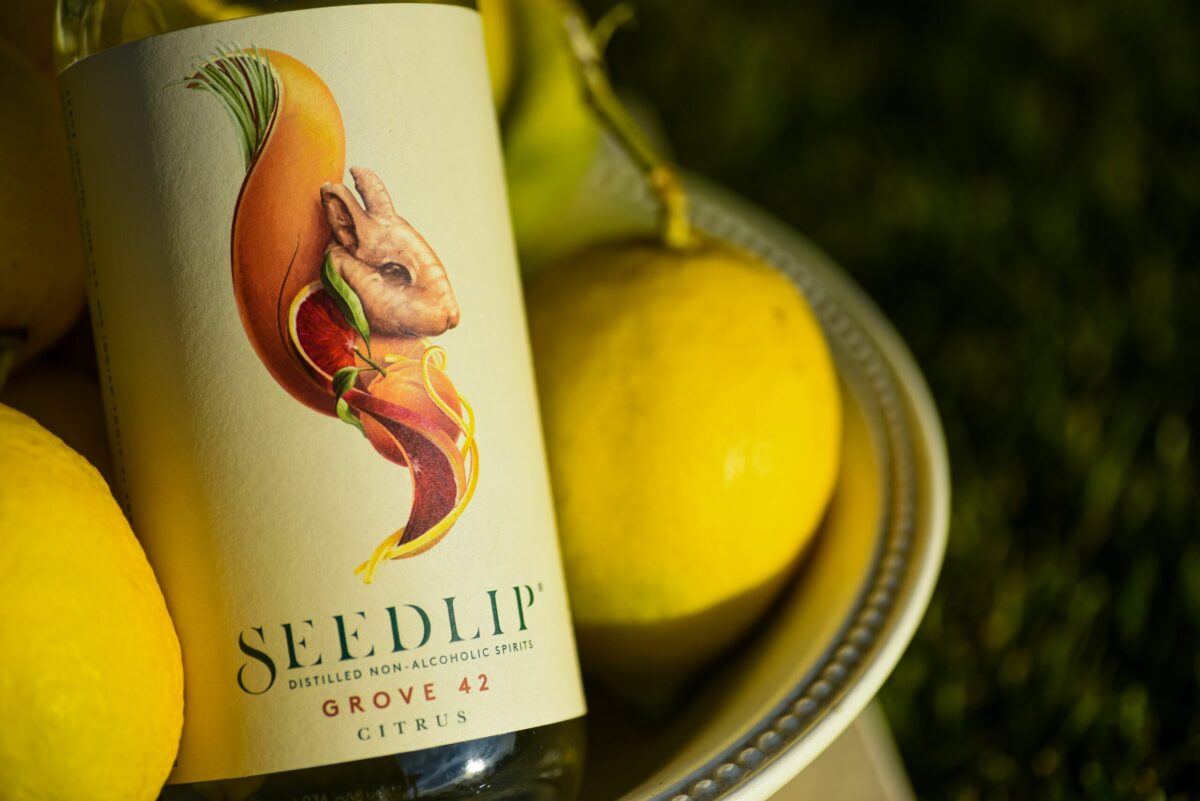
Non-alcoholic spirits and RTD cocktails are among the faster-growing parts of the market, with premiumisation helping them move away from the old image of alcohol-free drinks as compromises for people who cannot or do not want to drink.
That shift changes the competitive set.
A zero-alcohol gin is no longer competing only with a soft drink. It is competing with tonic water, kombucha, premium sodas, iced tea, energy drinks and cocktails — essentially anything that can occupy the consumer’s attention during a social occasion.
And that is where the drinks industry should pay attention.
The biggest opportunity may not be convincing alcohol drinkers to quit. It may be convincing them to buy one more drink.
Imagine a dinner table where four people would previously have ordered two bottles of wine. If each person starts with an alcohol-free aperitif, moves to wine with dinner and finishes with a zero-alcohol cocktail, the total number of beverage occasions increases.
Moderation can therefore create additional consumption occasions rather than simply cannibalising alcohol.
That is a very different proposition for a drinks company.
It also explains why packaging matters so much.
The consumer does not want to feel that they have been handed a consolation prize. A sophisticated can, elegant bottle or properly constructed cocktail needs to look like something worth choosing.
This is where South Africa’s premium beverage culture could become particularly useful.
The country already understands the language of provenance, craft, flavour and food pairing. Wine producers have spent decades teaching consumers to think about varietals and terroir. Craft brewers have introduced consumers to hop profiles and brewing techniques. The cocktail industry has turned ingredients and presentation into part of the experience.
There is no reason that alcohol-free drinks cannot borrow those cues.
Indeed, they may need to.
South Africa is already home to specialist producers pursuing this proposition. Cognato, for example, positions its de-alcoholised wines around food, flavour and social occasions rather than abstinence, while Cape Town-based De Pizan markets its non-alcoholic range as a premium product made using wine-industry techniques.
That is an important change in language.
Nobody wants to spend R100 or R150 on something described primarily by what it lacks.
“Alcohol-free” tells the consumer what is missing.
“Premium sparkling botanical aperitif” tells them what they are getting.
The industry will increasingly compete on the second description.
There is another reason this matters in South Africa: price.
Consumers remain under pressure, and the broader economy is hardly providing an ideal backdrop for experimental spending. The private sector contracted at its fastest pace since December in September, according to the latest PMI, with weaker new orders, supply-chain problems and higher fuel costs contributing to the deterioration.
That creates a paradox.
Premium drinks need consumers with disposable income.
But moderation products can also appeal to consumers looking for value because they offer another way to participate in a social drinking occasion without necessarily buying alcohol.
The category therefore has room at both ends of the market.
At one end is the inexpensive non-alcoholic malt drink bought alongside a braai.
At the other is a sophisticated alcohol-free sparkling wine or spirit alternative served at a restaurant.
Between them is an enormous middle ground.
That middle ground may become the battleground.
The winners are unlikely to be determined simply by who can remove alcohol most efficiently. De-alcoholisation technology is improving, but taste remains the critical test. A consumer might forgive an alcohol-free beer for tasting slightly different from its alcoholic equivalent. They are less likely to forgive an expensive drink that tastes artificial, thin or excessively sweet.
That is particularly true as the category moves into cocktails and wine.
The technical challenge is therefore becoming a creative challenge.
How do you build body without alcohol? How do you create bitterness without relying on spirits? How do you make a drink feel adult without simply adding sugar, bubbles or exotic botanicals?
Those are questions that winemakers, brewers, distillers, bartenders and flavour scientists are now answering from different directions.
And South Africa has plenty of raw material for the experiment.
Rooibos. Buchu. Citrus. Herbs. Indigenous botanicals. Fruit. Tea. Spices.
The country has an ingredient library that has barely been explored at scale by the modern premium drinks industry.
The irony is that the alcohol-free revolution could eventually produce some of the most distinctly South African drinks on the market.
Not fake gin.
Not imitation wine.
Something else entirely.
That is when the category becomes genuinely interesting.
Because the biggest mistake would be to treat non-alcoholic drinks as a temporary response to changing attitudes towards alcohol.
The numbers suggest something more permanent is taking shape.
The next great South African drinks brand may not ask consumers whether they want another beer, wine or spirit.
It may ask a much simpler question — what do you want to drink when you don’t want alcohol?