
The whitewashed Cape Dutch gables of Groot Constantia stand against the mountain slopes like monuments carved from time itself, watching over vineyards that have rooted themselves in South African soil since 1685. Down the barrel line and across the sprawling, historic estate, change has always moved with the deliberate, unhurried rhythm of a slow-maturing vintage, until today.
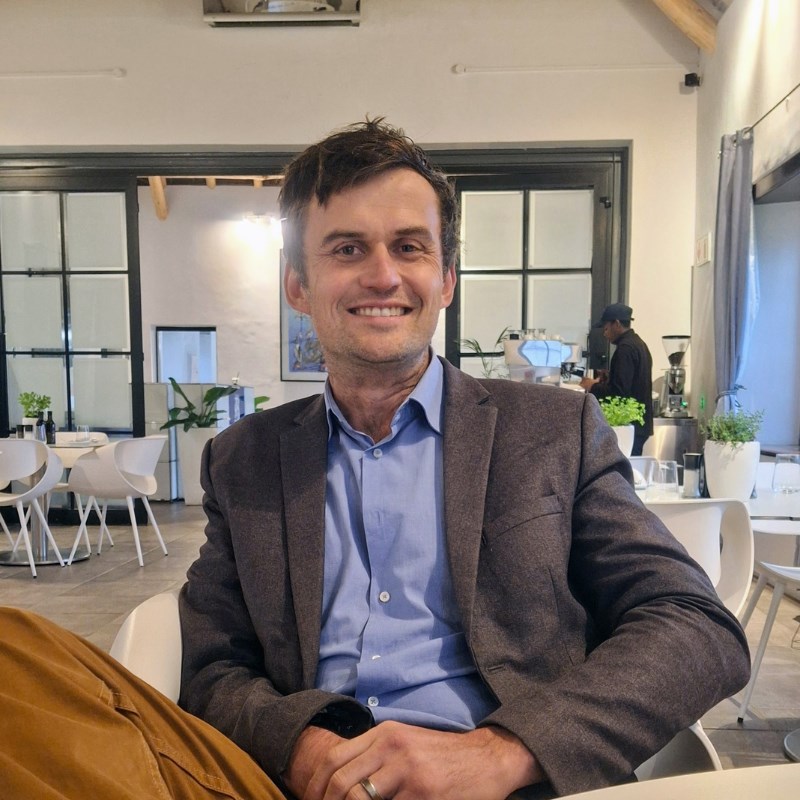
In a seismic leadership handoff that marks the end of an era for the country’s oldest continuous wine-producing estate, Groot Constantia has officially announced that Dr Edo Heyns will step into the role of Chief Executive Officer, effective October 19, 2026.
He inherits a sprawling legacy.
Outgoing CEO Jean Naudé is stepping down on November 30 after an extraordinary 24-year tenure that steered the national trust property through two decades of modern commercial maturation, international expansion, and tourism evolution. Twenty-four years in any corporate chair is a lifetime; in the volatile, climate-pressured, and hyper-competitive ecosystem of South African wine, it is an epoch.
Under Naudé, Groot Constantia cemented its position not merely as a historical museum piece, but as a fiercely competitive commercial enterprise. It operates under a unique mandate—held in trust for the nation—balancing public stewardship with the relentless bottom-line realities of modern agriculture and global wine distribution. When a property of this historical magnitude changes hands, the shockwaves reverberate far beyond the borders of the Constantia Valley.
Enter Edo Heyns.
Heyns is hardly a stranger to the complex machinery of the Cape wine trade. Most recently serving as CEO of Franschhoek estate Allée Bleue since March 2024, Heyns brings a formidable multi-disciplinary background spanning production, finance, human resources, marketing, sales, and international market development. His resume also boasts senior leadership roles at Advini South Africa—the local subsidiary of the French wine group AdVini International, which oversees heavyweights like Ken Forrester Vineyards and Stellenbosch Vineyards.
That international pedigree matters deeply. As South African producers grapple with a global wine market characterised by sluggish volume demand, shifting consumer palates, and fierce competition from European and New World rivals, the ability to navigate export channels with surgical precision is non-negotiable. Heyns arrives with a proven understanding of how global capital, brand positioning, and local terroir intersect.
Yet, leading Groot Constantia requires more than corporate acumen. It requires a delicate diplomatic touch.
The estate is a cultural anchor. Every bottle produced under its label carries the historical weight of South Africa’s vinous birth certificate. At the same time, it must function as a world-class tourism magnet, a sustainable agricultural farm, and a profitable business capable of weathering economic headwinds that have squeezed producer margins across Stellenbosch, Robertson, and Elgin to razor-thin levels.
The timing of this transition is profoundly symbolic. The South African drinks industry is currently hurtling through a period of intense structural recalibration. From the recent closure of hundreds of unlicensed liquor outlets and the premiumisation wave sweeping local brandy to anxious monitoring of El Niño weather patterns threatening the upcoming 2027 harvest, leadership stability at the top tier of South African wine has never been more critical.
When Naudé hands over the reins during a structured handover period starting this month, he leaves behind an estate firing on all cylinders. But the challenges awaiting Heyns on day one are entirely contemporary.
Climate resilience remains an existential threat. Vineyard teams across the Western Cape are currently staring down unpredictable spring weather, variable soil moisture, and the looming spectre of El Niño. While viticultural scientists work overtime to implement canopy management, mulching, and drought-mitigation strategies, keeping a centuries-old agricultural ecosystem profitable and sustainable requires unyielding vigilance.
Then there is the shifting architecture of consumer demand. The modern wine drinker is increasingly unpredictable. They are drinking less, but drinking better. They demand radical transparency, authentic provenance, and seamless digital engagement. Historic estates can no longer rely purely on heritage to fill tasting rooms or secure export orders. They must tell compelling stories that resonate with a younger, cost-conscious, and globally distributed audience.
Heyns’ track record at Allée Bleue and Advini suggests an executive well-equipped to bridge this exact divide. He understands how to scale a brand without diluting its identity. He knows that international markets do not buy nostalgia; they buy quality, consistency, and a distinct sense of place.
The transition period between Naudé and Heyns over the next two months will be watched closely by industry peers across the Cape. It is a masterclass in planned succession—a stark contrast to the abrupt structural shifts and distribution fractures that have rattled other segments of the South African beverage landscape recently.
For an industry searching aggressively for new avenues of value beyond sheer volume, Groot Constantia’s new chapter offers a compelling litmus test. Can South Africa’s oldest wine estate continue to honour its three-century-old vows while aggressively capturing the high-value global consumer of tomorrow?
The barrels in the cellar are resting. The vines are waking up to a warm Cape spring. And the man tasked with guiding the next quarter-century of South African wine history is stepping into the light.
How will history judge the next era of Groot Constantia?